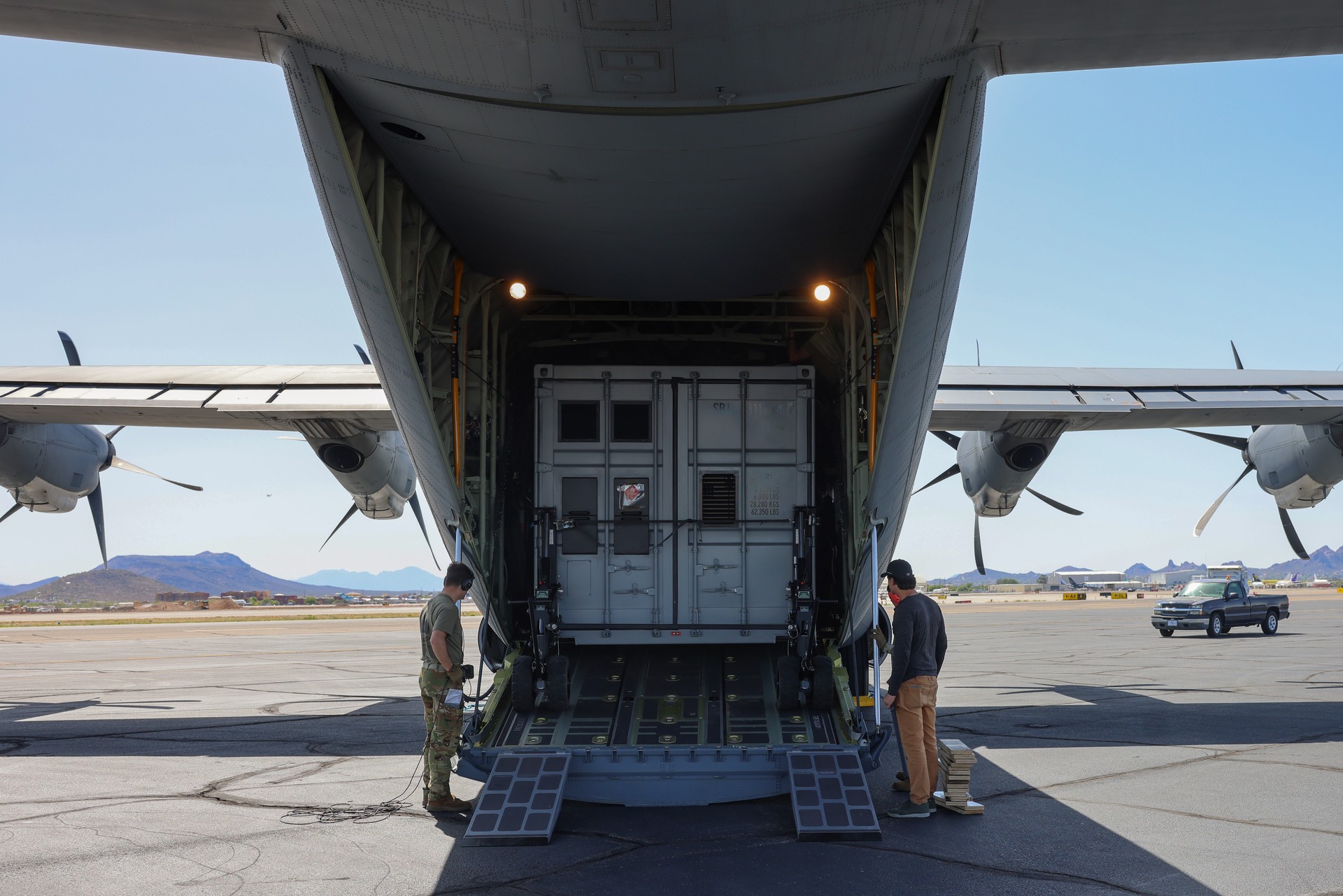
The Department of War's September 3 announcement of the Secure Space Network — 50 mobile Sensitive Compartmented Information Facilities to be deployed at military installations, APEX Accelerator sites, and other mission-relevant locations across the country — is being read as a logistics initiative. It is not. It is a decision about who gets to participate in classified defense development for the next decade, and the industrial base implications are larger than the facilities themselves.
The barrier being addressed is structural and has been in place for decades. Building a permanent, accredited SCIF can exceed $3 million in construction costs alone, before any of the information systems, communications infrastructure, or recurring compliance overhead that classified work requires. For an established prime contractor with a campus in the Northern Virginia corridor or near Huntsville, that cost is a rounding error on overhead rates. For a software startup in Denver with a breakthrough in autonomous target recognition, or a materials science firm in the industrial Midwest with no government experience, that capital requirement effectively ends the conversation before it begins. The cleared defense industrial base has not been a meritocracy; it has been a geography- and capital-filtered club.
What the Secure Space Network changes is the access point. Mobile SCIFs in the $310,000-to-$500,000 range — deployable to locations where nontraditional contractors already operate — shift the classification access problem from a capital investment decision that a company must make to an infrastructure availability question that the government provides. The APEX Accelerator placement is particularly strategic: those are exactly the institutions where DoD is already trying to cultivate small business and first-time-entrant relationships. Embedding cleared facilities in those locations closes the circuit — a company can go from procurement education to classified collaboration without having to build its own secure facility as an intermediate step.
The programs that stand to benefit most from this shift are the ones that need what nontraditional companies have. Classified AI development, autonomous systems software, advanced materials integration, spectrum management algorithms — these are not domains where the traditional prime hierarchy holds a decisive technical advantage. The advantage frequently sits in commercial firms that have been building these capabilities for non-defense applications and cannot participate at the classified tier because they lack the physical infrastructure. The Secure Space Network does not solve the personnel clearance problem, which remains time-consuming and expensive in its own right. But it removes one of the two major physical barriers that prevent nontraditional entrants from moving from unclassified prototype work to classified development contracts.
The outstanding question — whether companies will pay for access or whether the government will fund it entirely — matters considerably for the program's actual reach. A cost-recovery model that charges prevailing market rates for cleared facility use may still be prohibitive for the smallest entrants, who need the mobile SCIF precisely because they cannot afford facility costs at any price point. If the model is closer to a subsidized public utility — access funded through acquisition program overhead or a direct appropriation from the Office of Industrial Base Growth — the aperture genuinely widens. How that cost structure resolves will determine whether the Secure Space Network functions as a meaningful on-ramp or as a somewhat cheaper version of an obstacle that was already there.
The Office of the Under Secretary of War for Acquisition and Sustainment has been explicit that the goal is broadening competition across the defense industrial base. That framing is correct, but the mechanism is worth naming precisely: this is an attempt to extend the classified industrial frontier past the geographic and capital concentrations where it has been locked for thirty years. Whether 50 facilities are sufficient to meaningfully shift that geography is a legitimate question — the DoD industrial base is a national phenomenon and 50 deployable units is a modest start. But the architecture of the program, and the deliberate placement at APEX sites, signals that the intent is structural rather than symbolic. The defense technology market has been asking the government to remove barriers to nontraditional participation. The Secure Space Network is a concrete answer to that ask.